The untold story of 19,700 failures and the 300 breakthroughs that created PrismPixel Glass™
SCROLL THE YEARS
ITHE TIMELINE
Sixteen calendar years. Fifteen years of work. Every node is a year of panes.
Red is what was scraped off. Gold is what stayed on the glass. Hover or touch a year to open its ledger; the ratio above each node is the cumulative success rate at that point in the journey.
FAILED BATCHES BREAKTHROUGHS
0.00%
2009
420 batches
0 breakthroughs
0.00%
2010
780 batches
0 breakthroughs
0.04%
2011
1,040 batches
1 breakthrough
0.09%
2012
1,180 batches
2 breakthroughs
0.13%
2013
1,320 batches
3 breakthroughs
0.18%
2014
1,410 batches
5 breakthroughs
0.25%
2015
1,460 batches
8 breakthroughs
0.33%
2016
1,600 batches
11 breakthroughs
0.42%
2017
1,620 batches
15 breakthroughs
0.53%
2018
1,580 batches
21 breakthroughs
0.67%
2019
1,540 batches
27 breakthroughs
0.82%
2020
1,480 batches
34 breakthroughs
1.00%
2021
1,400 batches
42 breakthroughs
1.21%
2022
1,320 batches
51 breakthroughs
1.42%
2023
1,290 batches
56 breakthroughs
1.50%
2024
560 batches
24 breakthroughs
2009
BATCHES FM-00001 → FM-00420
The first pane went opaque on the first pass. Everything after that was learning what light refuses.
The window stayed a window. 48.2% transmittance, 99.3% hotspot extinction at a 15 µm build.
MTF
0.82
EXTINCTION
99.3%
TRANSMIT.
48.2%
IIITHE ONE THAT STAYED
FM-20000. The window stayed a window.
Nineteen thousand nine hundred and ninety-nine panes had been scraped back to clear glass. This one was not.
FM-20000
BREAKTHROUGH2024
PARTICLE BREAKDOWN
SiO₂ nanospheres
180 nm
4.1% vol
SiO₂ nanospheres
320 nm
2.7% vol
TiO₂ (rutile), trace
240 nm
0.4% vol
BaSO₄
1.1 µm
2.1% vol
Acrylic-urethane hybrid binder, lot A
—
balance
SPRAY METHODOLOGY
GUN
HVLP, 1.3 mm tip
PRESSURE
2.4 bar at the cap
ANGLE
90° to the substrate
DISTANCE
22 cm
PASSES
Three, cross-hatched, 40 min flash between
DRY FILM
15 µm · 72 h ambient cure
0.82
MTF @ 10 LP/MM
99.3%
HOTSPOT EXTINCTION
48.2%
TRANSMITTANCE
1.8%
HAZE
160°
VIEWING CONE
“
To my son, Charlie, who is now fifteen years old: I want you and the world to know that the fourteen years I spent upon this, the eighteen-hour days, the seven days a week that were poured into this work—they were all for you.
— THE RESEARCHER, ON THE NIGHT OF FM-20000
IVTHE CYCLE
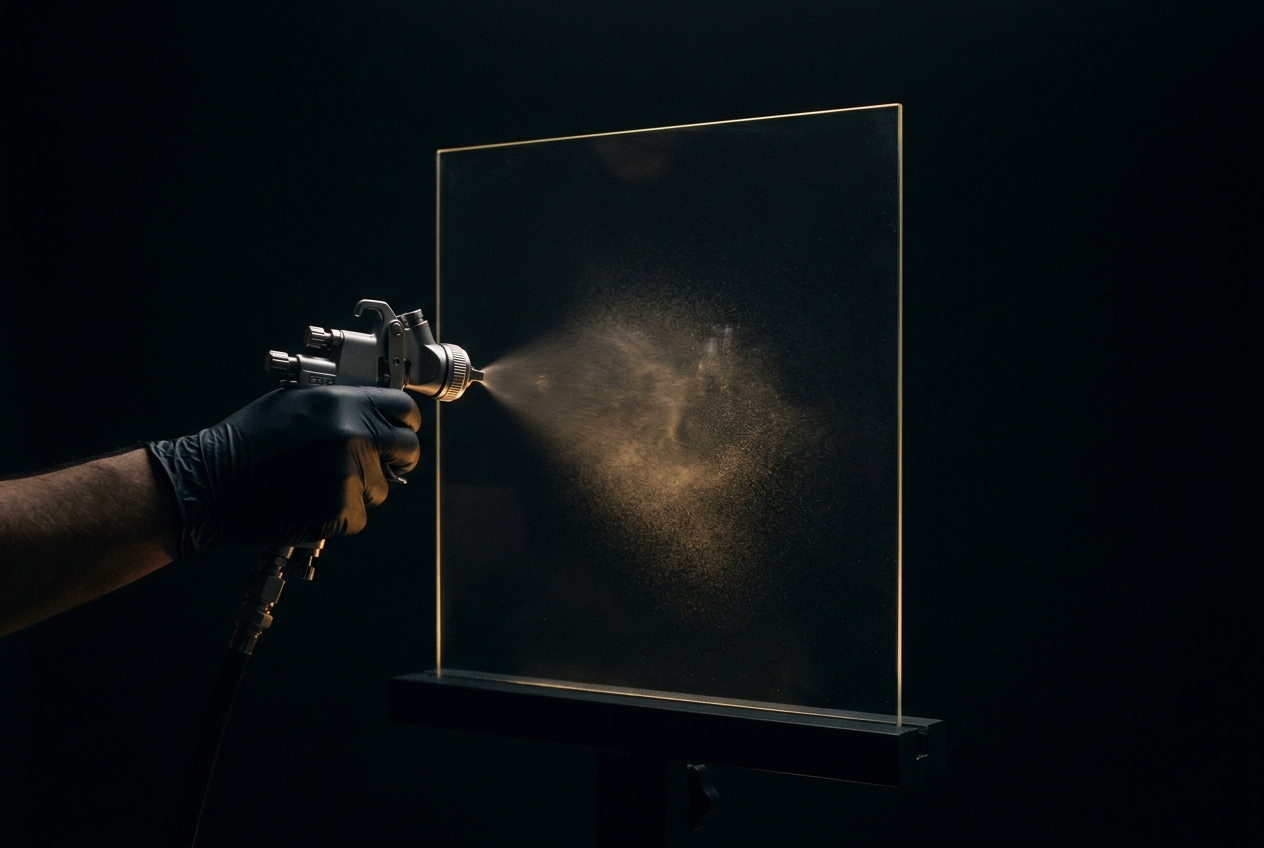
Spray. Dry. Walk around. Evaluate. Scrape. Repeat.
There was no automation and no assistant. One gun, one rack, one projector, one razor. The cycle ran twenty thousand times.
1
Spray
HVLP gun, 1.3 mm tip. Three cross-hatched passes at arm's length.
2
Substrate
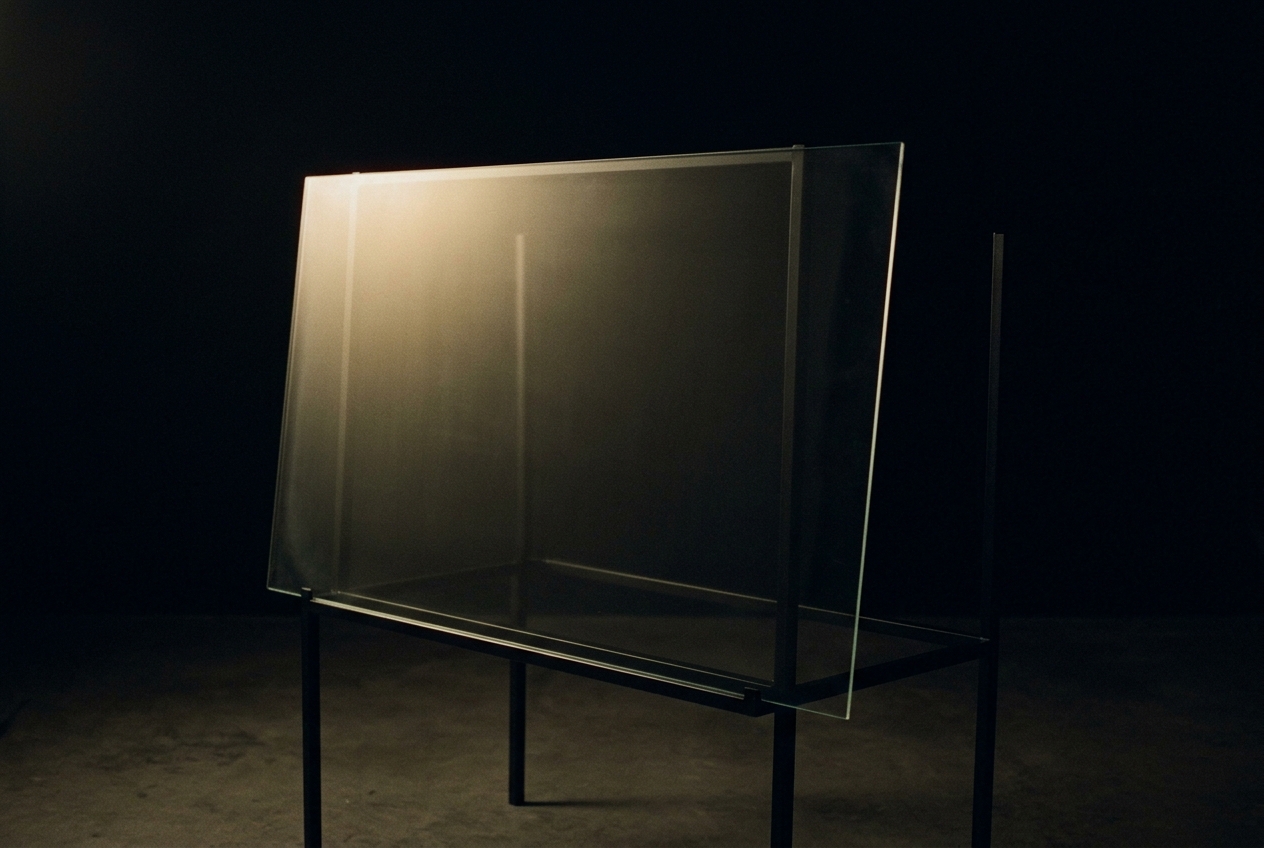
A pane of float glass, cleaned to a squeak and edge-lit.
3
Dry
Forty minutes on the rack. Flash-off, then a slow ambient cure.
4
Walk around
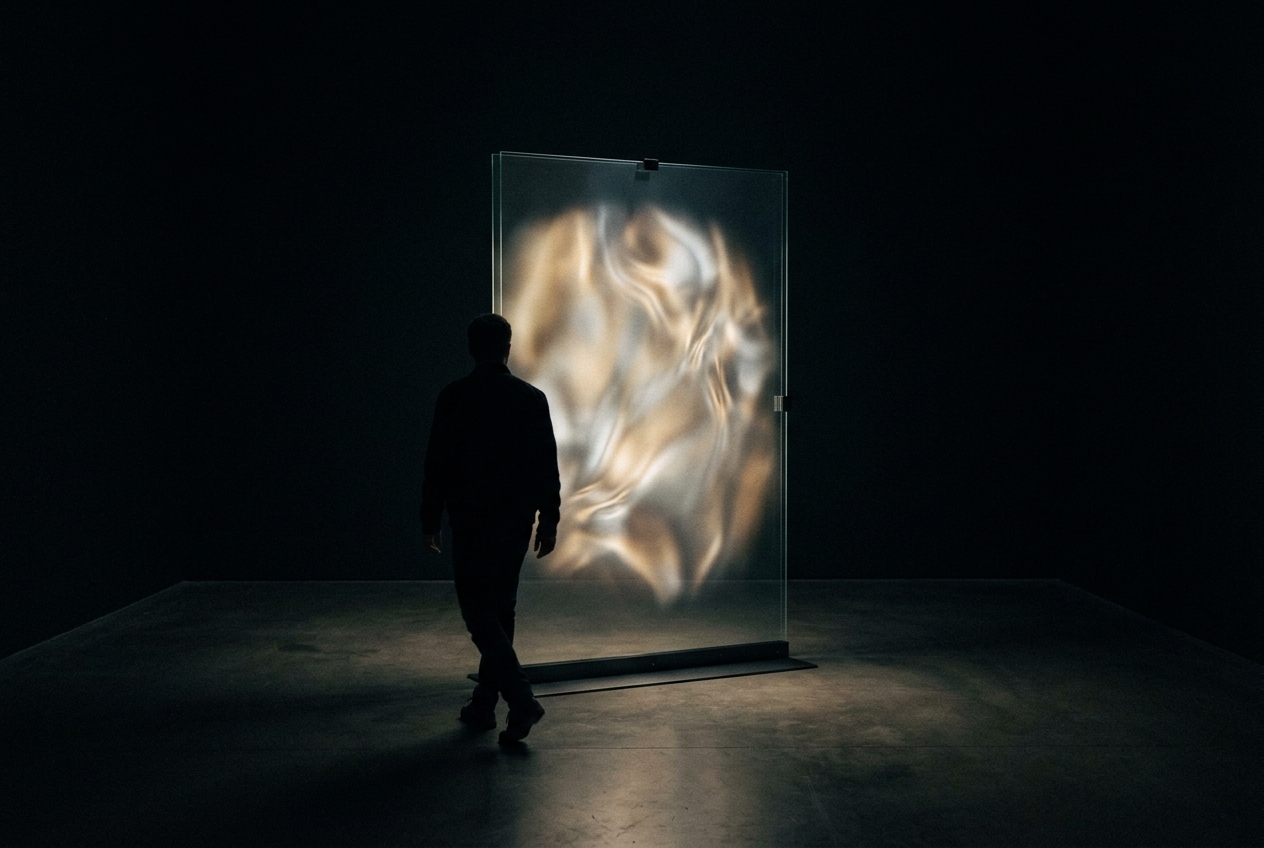
Projector on. A full circuit of the pane at one, two and three metres.
5
Evaluate
Hotspot, haze, speckle, colour shift, cone. A number for each; most were wrong.
6
Scrape
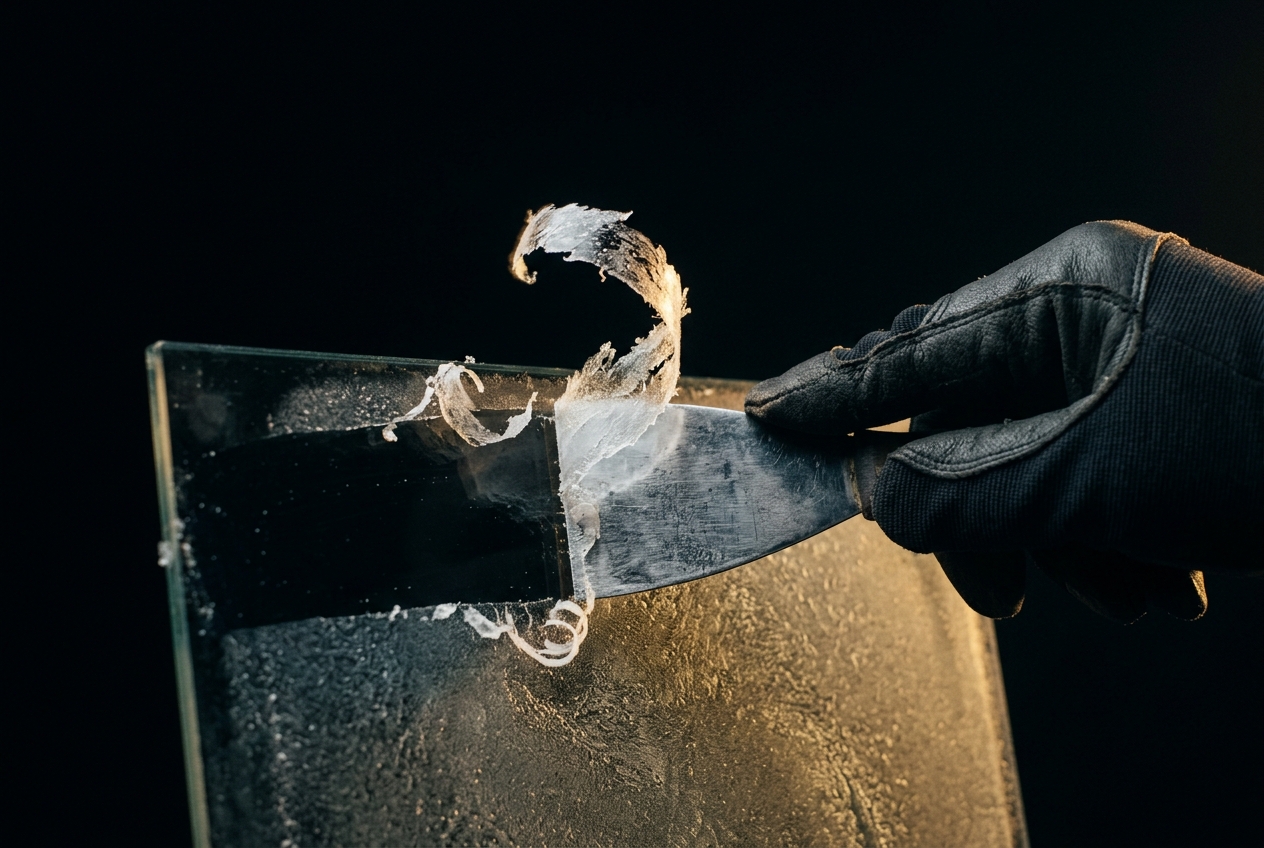
A steel razor and an hour. The pane returned to clear glass.
↺
Repeat
Adjust one variable. Only one. Begin again.
THE SUSPENSION
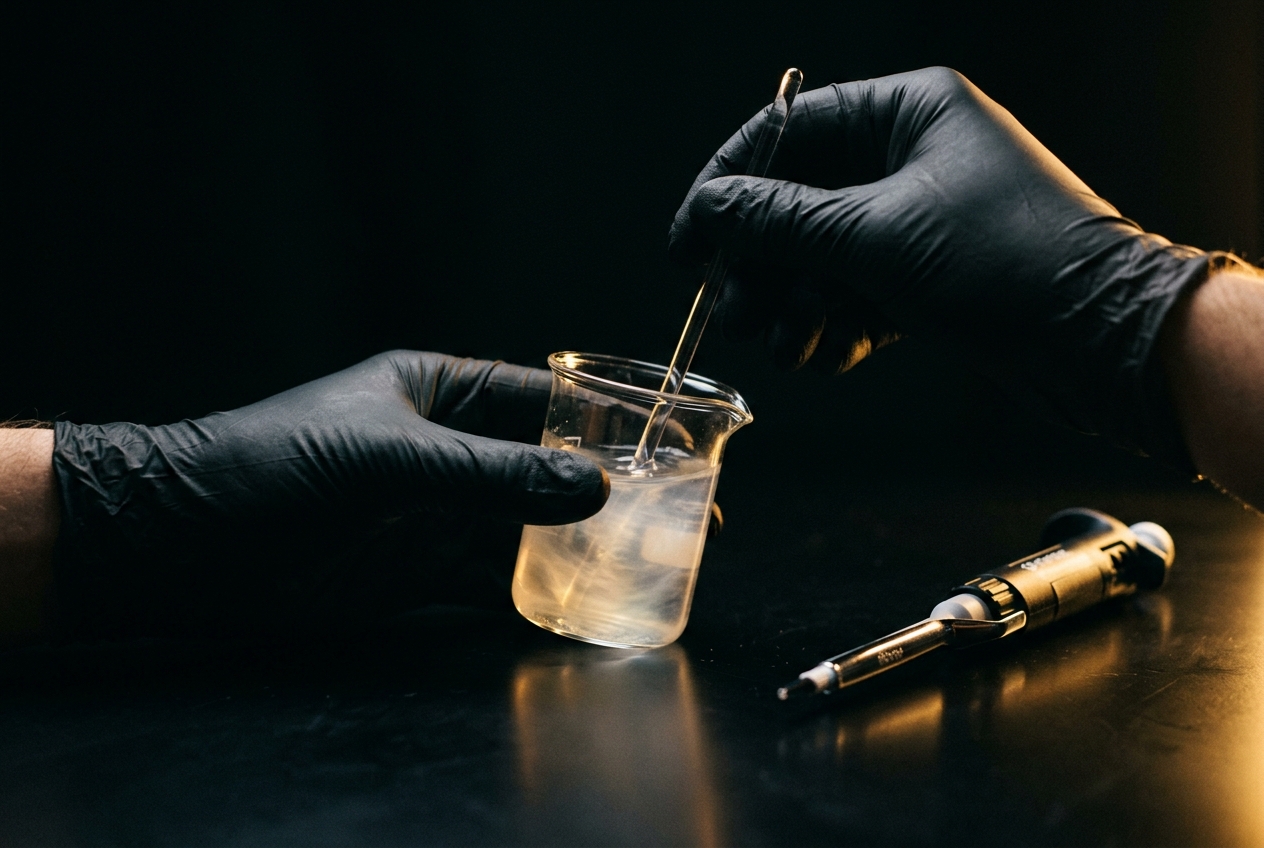
Nanoparticles, binder and solvent, swirled by hand before every batch.
THE SPRAY
One pass too wet and the film sagged; one too dry and it dusted.
THE RACK
Forty minutes of not touching it.
THE WALK-AROUND
The projector tells the truth from every angle at once.
THE SCRAPE
Nineteen thousand seven hundred times, back to glass.